Getting dressed for a wedding is one of the few occasions where the stakes feel genuinely high, the rules are simultaneously rigid and unclear, and the consequences of getting it wrong are documented in photographs that exist forever. No pressure.
The anxiety is understandable. Wedding dress codes have fragmented significantly in the past decade: "cocktail attire" at one wedding means a LBD, at another it means sequins, and at a third it means whatever the couple decided to write on their invitation app. "Garden party" can mean a floral midi dress or a structured blazer over wide-leg trousers depending entirely on whose garden and which party. The traditional rules (no white, possibly no black, hemlines proportional to formality) still apply — but they now coexist with a generation of couples who specifically want their guests to have fun with fashion.
This guide translates the most common wedding scenarios into actionable outfit formulas. Four venue types, clear dress code translations, seasonal adjustments, and specific brands you can shop today. The objective: to arrive at the ceremony looking like someone who understood the assignment, enjoy the reception without worrying about your outfit, and leave before you're in any photographs you'd regret.
Dress Code Translation: What Each Term Actually Means
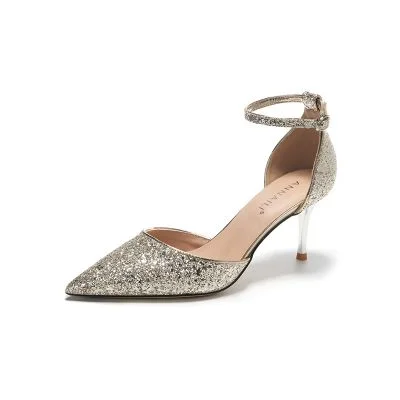
Black tie: a floor-length gown or a very formal midi dress in a structured fabric. This is the one occasion where sequins are not just acceptable but correct. Cocktail attire: knee-length to midi-length dress, or tailored separates in an elevated fabric — silk, satin, or structured crepe. A blazer over a silk slip reads as appropriately cocktail. Garden party or outdoor: flowing midi or maxi dress, floral or soft colour palette, comfortable heels (block, wedge, or kitten — grass and stilettos are incompatible). Smart casual: the most ambiguous code, but typically means an interesting trouser-and-blouse combination, a tailored midi dress, or dark jeans elevated with a blazer and a silk top. Casual or beach: a maxi dress, a sundress with espadrilles, or linen separates — treat this as an elevated vacation outfit rather than a dressed-down version of the others.
The White and Black Question: The Actual Rules
White: avoid it entirely as a primary colour. Ivory, champagne, and cream are grey areas — if your dress is clearly not trying to be white (a pattern, a strong fabric, an unambiguously warm tone), you're probably fine. When in doubt, don't. The risk isn't fashion; it's optics. Black: completely acceptable at most contemporary Western weddings, particularly in urban settings, evening ceremonies, and any couple under 40. The exceptions where black still reads as inappropriate: very traditional or religious ceremonies, weddings in cultures where black is a mourning colour, and outdoor daytime weddings where the dress code is 'garden party' — in those contexts, black reads as the absence of celebratory effort rather than a style choice. If you're uncertain, add a colourful accessory (a printed wrap, bold earrings, a patterned bag) to soften the reading.
Season-by-Season Wedding Guest Strategy
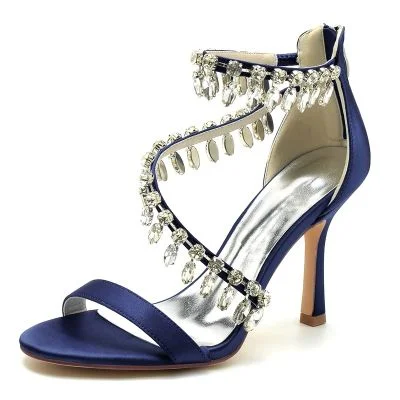
Spring weddings: floral midi dresses in soft tones (blush, lavender, mint), light trench coats for ceremony, block-heel sandals. Summer weddings: maximum fabric movement — chiffon, cotton voile, viscose. Linen tailored trousers with a silk top work for beach or garden. Espadrilles and wedge sandals over stilettos for lawn venues. Autumn weddings: this is the richest season for wedding guest dressing — deep burgundy, forest green, and burnt orange all work beautifully in the lighting and photographs warmly against foliage. Midi dresses in velvet or structured crepe for indoor venues. Winter weddings: floor-length gowns become proportionally appropriate. A faux fur stole over a satin gown, dark velvet midi, or a tailored jumpsuit in a rich colour (deep green, midnight blue) all read correctly for an indoor winter ceremony.
What to Wear to a Destination Wedding
Destination weddings — beach, vineyard, European villa — have their own internal logic. The beach wedding: a flowy maxi dress in a warm colour (terracotta, coral, warm white with significant pattern), flat sandals or wedges, no structured bag. The vineyard wedding: this is one of the best occasions for a tailored approach — midi dress with a blazer, or wide-leg trousers with a silk blouse and block-heeled loafers. The European destination: takes its cues from the local context — a formal Italian villa wedding has different expectations than a casual Greek island ceremony. Research the specific venue's tone, and when in doubt, slightly overdress: it is much easier to remove a blazer or unwrap a shawl than to manufacture formality you didn't bring.
Can I wear a jumpsuit to a wedding?
Yes — with specific caveats. A wide-leg jumpsuit in a formal fabric (crepe, silk, tailored suiting) works for cocktail attire and smart casual dress codes at contemporary weddings. The key factors: the fabric must read as occasion-appropriate (not denim, not jersey, not linen in a casual finish), the fit must be impeccable (jumpsuits are unforgiving of sizing inaccuracies), and the colour should be clearly celebratory rather than utilitarian. A white or cream jumpsuit is subject to the same no-white rule as a dress. Avoid jumpsuits at very formal black-tie events, very traditional or religious ceremonies, or daytime garden parties where a dress is clearly the contextual expectation.
What shoes work for outdoor weddings with grass?
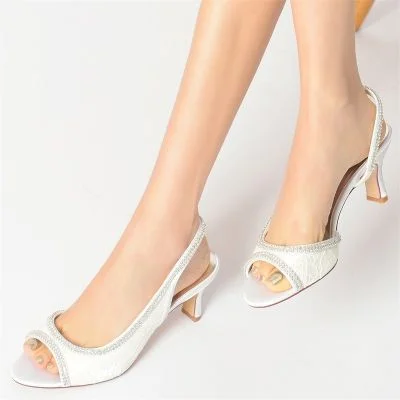
The stiletto-on-grass problem is one of the oldest in wedding guest dressing, and the answer is now clear: block heels, wedge heels, kitten heels, or flat sandals. A block heel with a 6cm height provides the polish of a heeled shoe without sinking into soft ground. A wedge distributes your weight across a larger surface area — functional for grass and cobblestones equally. Flat sandals in a dressy material (leather, metallic, strappy) are completely appropriate for outdoor daytime ceremonies and read as intentional rather than underdressed when the rest of the outfit is elevated. Whatever you choose: test the shoe on a soft surface before the day.
Is it okay to wear floral to a wedding?
Floral is the single most popular print for wedding guest dresses, and for good reason — it reads as celebratory, it photographs well against greenery, and it avoids the solid-colour questions entirely. The considerations: scale (smaller, more tonal florals read as more sophisticated than large, saturated ones), background colour (a floral on a dark background is appropriate for evening; a floral on a light background works better for daytime), and proximity to white or ivory (a predominantly white floral with small colour accents is pushing the no-white convention and should be avoided unless the couple has explicitly encouraged it).
How early should I buy my wedding guest outfit?
Four to six weeks before the wedding if you're ordering online — longer for anything that requires tailoring or might need to be returned and replaced. The practical reason: online return windows are typically two weeks, and the replacement cycle (return, wait for refund, reorder, wait for delivery) consumes more time than people expect. If you're buying in-store and need alterations, allow three weeks minimum — alterations departments at major retailers operate on two-to-three week timelines during peak wedding season (April through October). The psychological reason to buy early: you'll have time to try the complete outfit including shoes and accessories in good light, identify problems, and fix them without the pressure of a deadline.
What do I wear to a wedding in a religious venue?
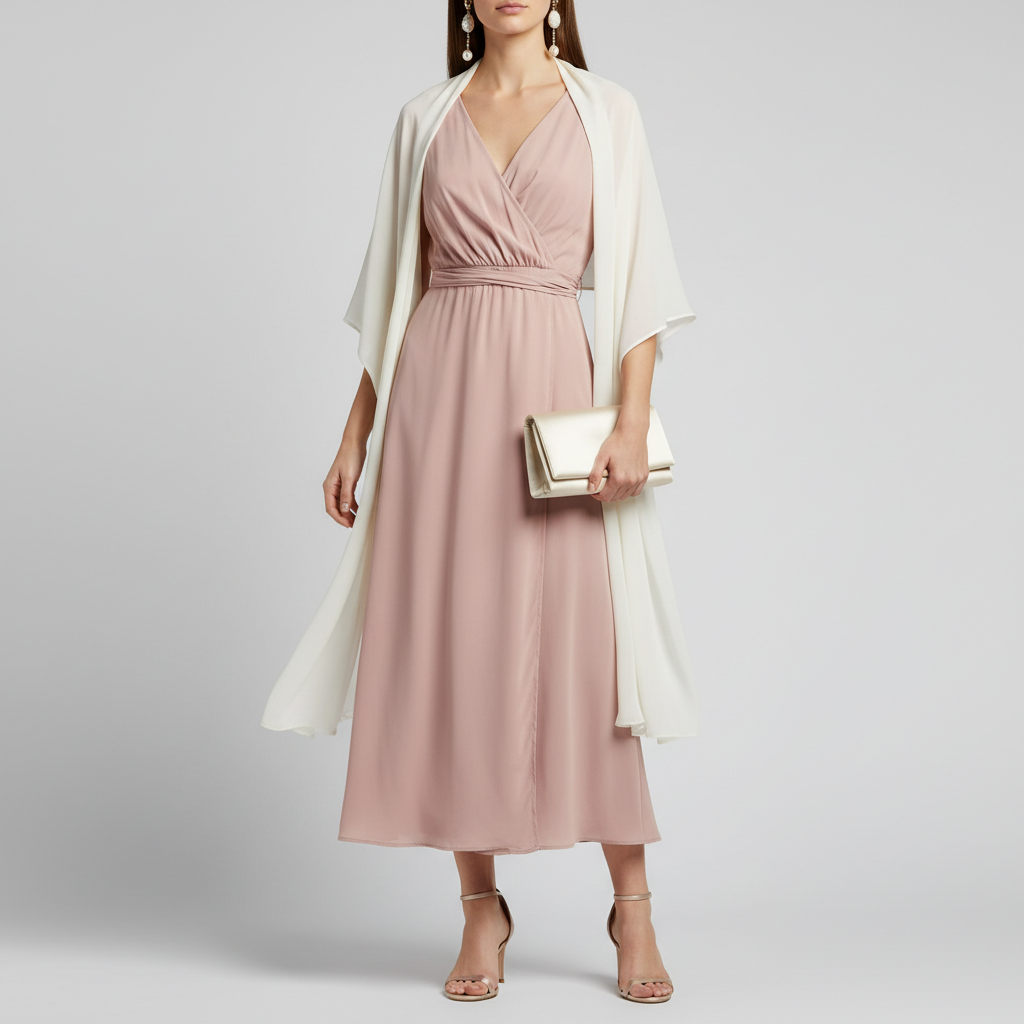
Religious venues introduce coverage requirements that secular venues don't: many churches, synagogues, mosques, and temples require covered shoulders and sometimes covered knees. The most versatile approach: choose a dress that works beautifully on its own and layer a cover-up for the ceremony specifically. A lightweight chiffon wrap, a fitted blazer, or a sheer long-sleeve layer over a sleeveless dress all satisfy coverage requirements without sacrificing the look. The cover-up should coordinate with rather than contrast the dress — the same colour family or a neutral that reads as part of the outfit rather than a concession to the dress code.
Can wedding guests wear black?
At most contemporary Western weddings: yes. Black is now broadly accepted at urban weddings, evening ceremonies, cocktail events, and any wedding with a younger, style-conscious couple. The contexts where black remains potentially inappropriate: very traditional or religious ceremonies (check with the couple or the family if you're uncertain), cultures where black is strongly associated with mourning, and outdoor daytime garden-party-coded weddings where the expected palette is light and celebratory. The practical hedge if you're uncertain: a black dress with colourful or metallic accessories (statement earrings, a patterned clutch, a jewel-toned wrap) signals that you chose black deliberately as a fashion decision rather than defaulting to it.