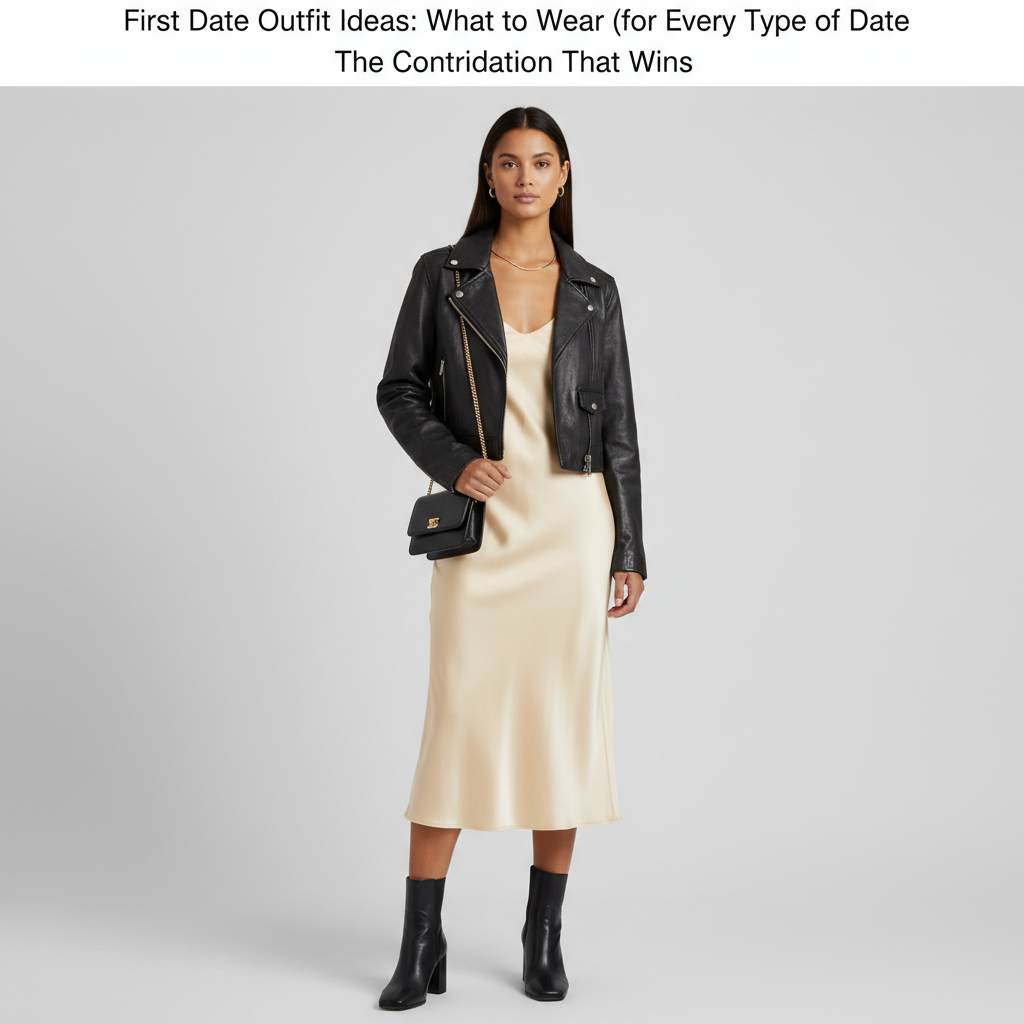
There's a specific kind of paralysis that happens when you open your wardrobe before a first date. You're not just picking an outfit; you're making a dozen micro-decisions at once — about how much effort to signal, how available to appear, whether to be surprising or reassuring, whether to dress for the venue or for the version of yourself you want to be. Most style advice about first dates skips all of this in favour of "wear something that makes you feel confident." True, and completely unhelpful.
The real framework is simpler: your first date outfit should be the best version of how you already dress. Not a costume, not a departure, not an aspiration. If you're a jeans-and-blazer person, wear your best jeans with your best blazer. If you live in dresses, wear your favourite dress with something that elevates it slightly above everyday. The goal is to look like yourself — just the Sunday morning version, when the light is good and you're not rushing.
What follows is a breakdown of four distinct date scenarios — from the low-stakes coffee to the elevated dinner — with specific outfit formulas, real brands, and the quiet psychology behind why they land. Pick your scenario and start there.
The Coffee Date: Low-Stakes, High Payoff
A coffee date has one sartorial challenge: it's casual enough that over-dressing reads as desperate, but specific enough that under-dressing reads as disinterested. The formula is elevated casual: your best fitting jeans paired with a silk blouse or quality knit, finished with loafers or clean white trainers. The key word is 'best fitting' — jeans that flatter your specific proportions, not jeans you've had since university. Add one deliberate element (a good coat, an interesting earring, a scarf) and you've signalled effort without performing it.
The Dinner Date: The Classic, Done Properly
Dinner dates give you permission to dress with more intention — and most women undershoot. A midi dress or wide-leg trousers with a silk blouse are both appropriate and memorable. The evening staples: something in a fabric with movement (silk, satin, crepe), a shoe with a heel or structured sole, and a bag you'd keep on the table rather than the floor. Avoid: brand-new items you haven't worn before (nerves + untested waistbands = distraction), heavy perfume (you'll be sitting close for two hours), and anything that requires constant adjusting.
The Gallery or Museum Date: The Cultural Signal
A gallery opening or museum date is one of the best first date contexts precisely because the setting provides conversation material. Your outfit should echo the intellectual register of the setting: interesting over pretty, considered over flashy. This is the occasion for an interesting trouser in an unexpected texture, a blazer in an unusual colour, or a minimal dress with a structural quality. Avoid anything too formal (a cocktail dress at a contemporary art space signals you've misread the room) or too casual (denim that reads as weekend). The gallery date rewards the person who looks like they belong there.
The Outdoor Date: Fashion Meets Function
Picnics, walking dates, botanical gardens — these require outfit thinking that accounts for unpredictable ground, variable temperature, and the possibility of sitting on grass. The priorities shift: comfort and practicality take equal billing with aesthetics. A sundress with trainers is charming and practical. Wide-leg trousers with a tucked linen shirt reads as effortlessly put-together while allowing full movement. The critical accessories: a light jacket or wrap (temperature drops), a shoulder bag or backpack that doesn't require a hand to carry, and shoes you can actually walk a mile in. No heels, no silk that stains instantly, no anything that makes you look like you're suffering through the venue.
How much effort is too much for a first date?
The answer depends almost entirely on the venue. For coffee: a clear but understated effort is right — jeans and a blazer reads as 'I thought about this' without 'I've been thinking about this for three days.' For dinner: a dress or tailored separates with a heel are exactly the right level. The risk of over-dressing is less about looking try-hard and more about creating a mismatch with the setting — wearing a cocktail dress to a casual bistro is awkward for everyone. Match the formality of the venue, and then add one element that's slightly above it.
Should I wear something new on a first date?
Almost never. New clothes carry risk: unfamiliar fits, unexpected chafing, waistbands that dig after two hours, shoes that haven't been broken in. The best first date outfit is something you've worn at least twice and know well — something you don't have to think about while you're wearing it. If you want something new in the outfit, make it an accessory: new earrings, a new scarf, a new bag. These carry no structural risk and still give you the psychological lift of something fresh.
What's the best first date outfit for a casual restaurant?
Dark wash jeans or wide-leg trousers paired with a silk or silk-touch blouse, finished with loafers or block-heel mules. This combination works across virtually every casual restaurant setting — it's dressed-up enough to signal that the evening matters, casual enough not to look overdressed when you're sitting across from someone who showed up in clean jeans and a good shirt. The blouse does significant work here: it transitions jeans from weekend to evening instantly.
What should I avoid wearing on a first date?
Anything that requires constant adjustment: a too-short dress you're pulling down, straps that slip, waistbands that sit uncomfortably after a meal. Strong fragrance — you'll be in close proximity and you don't know your date's sensitivities. Anything brand-new and untested (see above). And the most overlooked: shoes you can't walk in comfortably — a first date often involves more walking than expected (finding the restaurant, walking to a bar after), and suffering through footwear telegraphs discomfort to the person you're trying to impress.
Can I wear jeans on a first date?
Yes — jeans are completely appropriate on a first date in most contexts, particularly coffee, casual dinner, gallery visits, and outdoor dates. The formula for jeans that read as first-date appropriate: dark wash, good fit (specifically at the waist and thigh), and elevated by whatever you wear with them. A silk blouse, a structured blazer, or a beautiful knit sweater transforms jeans from casual to considered. The shoes matter almost as much as the jeans: loafers, heeled mules, or ankle boots take jeans decisively out of the 'just hanging out' register.
What colours work best for a first date?
Warm neutrals (camel, ivory, warm white, blush) are universally flattering under evening lighting — restaurants and bars are almost always warmer-toned, and these colours glow under incandescent light rather than washing out. Burgundy and forest green both read as intentional without trying too hard. A pop of colour in a specific piece (a cobalt top, a red bag) is memorable if it's your authentic style. The colours to approach carefully: stark white in a setting with red wine, pale grey which can look washed-out under dim lighting, and any very saturated tone that dominates the visual field at close range.