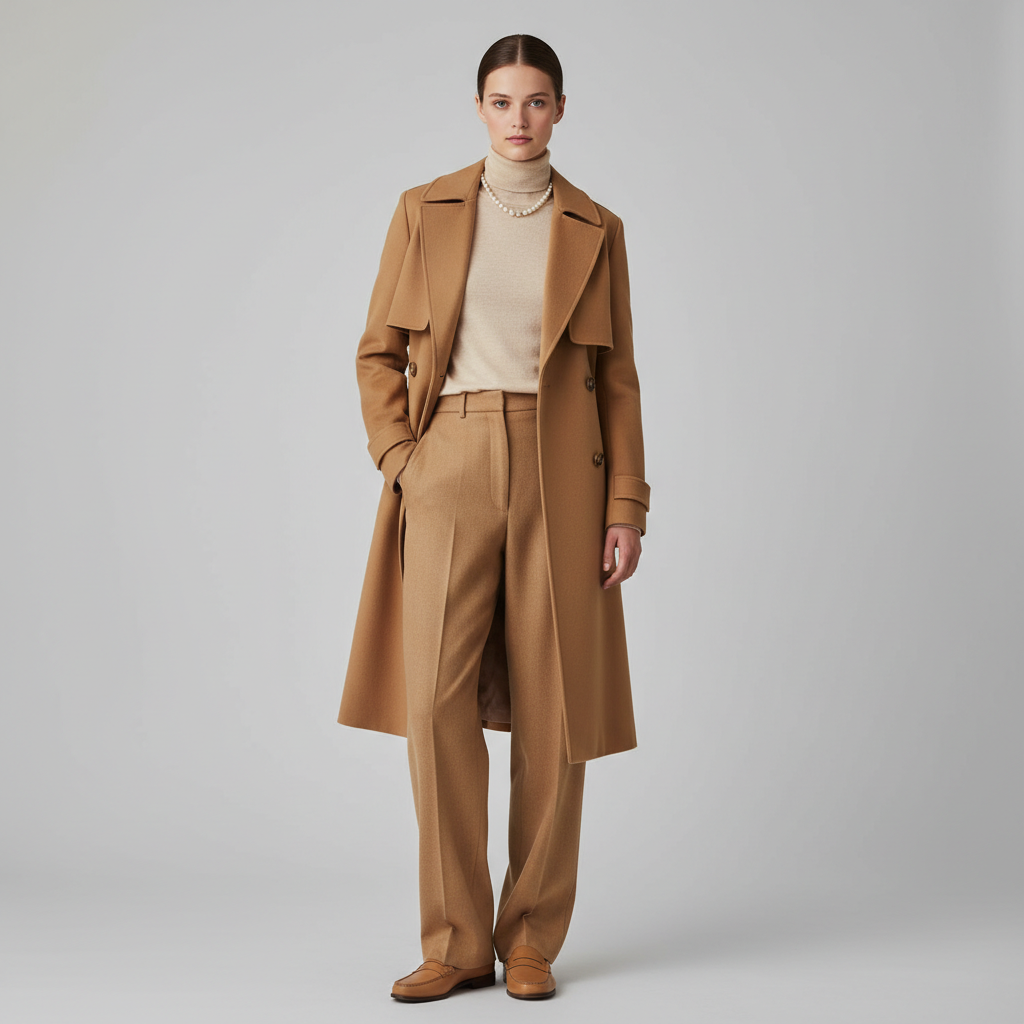
In the summer of 2023, "old money aesthetic" became one of the most searched fashion terms on the internet. The irony wasn't lost on anyone: a look defined by conspicuous inconspicuousness, by wealth so established it requires no logos to announce itself, had gone viral on the most democratic platform in the world.
The old money aesthetic has genuine roots. It traces back to the WASP dress code of New England boarding schools, the understated tailoring of British aristocracy, and the studied nonchalance of the Hamptons in the 1970s — where the richest people in the room were the ones wearing faded chinos and a worn-in polo shirt. The visual language is specific: muted palette (camel, cream, navy, forest green, burgundy), natural fabrics (cashmere, linen, merino, leather), heritage brand references (Loro Piana, Ralph Lauren Purple Label, Barbour, Church's), and a total absence of anything loud, logo-forward, or trend-dependent.
The practical news: the aesthetic is entirely achievable without the price tags. Old money style is about proportion, fabric drape, and restrained palette — not about spending $4,000 on a cashmere blazer. Uniqlo's cashmere-blend turtlenecks, ARKET's tailored trousers, and COS's clean leather loafers produce the same visual result as pieces that cost ten times more. What this guide gives you is the formula, the specific pieces, and the cultural context to wear it without it reading as costume.
The Old Money Colour Palette: Why These Six Colours and No Others
The old money palette is not arbitrary. It reflects the natural and institutional colours of the environments where the aesthetic originated: navy (school blazers, boat paint, the Atlantic), camel and cream (cashmere, equestrian, New England autumn), forest green (countryside, Barbour, shooting jackets), burgundy (Harvard and Princeton school colours, library walls, aged wine), and ivory or off-white (linen in summer, pearl, and deliberately un-fresh white — the aristocracy has always preferred linen that's been laundered a hundred times over the crispness of newly bought white). The palette is also strategically low-saturation: nothing bright, nothing that reads as newly purchased, nothing that competes for attention. The signal you're constructing is permanence, not novelty.
Old Money vs. Quiet Luxury: The Distinction That Matters
The two aesthetics are related but not identical. Quiet luxury is the broader category: minimal branding, quality fabrics, understated colour palette — applicable to contemporary designer dressing at The Row, Loro Piana, or Toteme. Old money aesthetic is a more specific cultural reference: it carries a deliberate temporal quality (these clothes look like they've been worn before, are well-maintained rather than brand-new) and leans on heritage silhouettes (penny loafers, polo shirts, cable knits, trench coats) that have specific American and British prep-school associations. In practice: quiet luxury can wear a beautifully constructed contemporary blazer; old money aesthetic specifically reaches for the one that looks like it has a school crest on the breast pocket, even if it doesn't.
The Heritage Brands vs. Affordable Alternatives
The old money aesthetic references specific brand categories that, at full price, are genuinely expensive. The translations for each: Loro Piana cashmere → Uniqlo extra-fine merino or cashmere blend (the visual result is identical at conversational distance). Barbour waxed jacket → similar waxed cotton jackets from LL Bean, Joules, or Belstaff at half the price. Church's loafers → COS, Mango, or Massimo Dutti leather loafers for under £150. Hermès belt → any simple leather belt in tan or cognac with a plain rectangular buckle. Ralph Lauren cable knit → Gap Heritage cable knit, or any retailer's 100% cotton cable. The rules for the substitution: match the silhouette exactly, prioritise natural fabrics over synthetic, and accept that you may need to replace affordable pieces more frequently — but twice as often at a third of the price is still a better deal.
Common Mistakes That Break the Aesthetic
The old money aesthetic fails when it tips into costume rather than wardrobe — when it reads as a reference to the aesthetic rather than the aesthetic itself. The most common mistakes: over-logoising with heritage brand names visible (old money doesn't advertise, even the right brands); buying polyester versions of natural-fabric pieces (the drape is always wrong, and the visual effect depends entirely on how the fabric moves); adding one trend piece to an otherwise correct outfit (the aesthetic is specifically anti-trend — it should look like it was assembled five years ago and will still be correct five years from now); and new-ness in the wrong places (a clearly brand-new leather bag in an otherwise broken-in-looking outfit creates a dissonance that signals you bought the look rather than grew into it).
What is the old money aesthetic exactly?
The old money aesthetic is a style approach that mimics the dress code of individuals whose family wealth is generational rather than newly acquired — people for whom dressing well is an inherited habit rather than a performance. Its visual characteristics: muted, natural colour palette; heritage silhouettes (polo shirts, cable knits, blazers, penny loafers, trench coats); natural fabrics exclusively (cashmere, linen, merino, leather, cotton); minimal or absent logos; and a specific quality of 'worn-in-ness' — clothes that look well-maintained and frequently used rather than recently purchased. It originated in American East Coast prep school and Ivy League campus culture, has significant overlap with British country and urban upper-class dressing, and was codified as a cultural aesthetic by Ralph Lauren's early collections.
What's the difference between old money and quiet luxury?
Quiet luxury is the broader trend category: designer clothing from minimal, logo-free brands (The Row, Toteme, Loro Piana, Brunello Cucinelli) characterised by exceptional fabric quality and understated design. Old money aesthetic is a more culturally specific subset: it references particular heritage silhouettes (penny loafers, cable knits, blazers with anchor buttons) and carries a temporal quality — pieces that look like they have history rather than pieces that simply look expensive. Quiet luxury can be entirely contemporary in its reference; old money aesthetic has a deliberate retro quality. In practice: a very expensive minimal contemporary blazer is quiet luxury; a slightly worn Harris Tweed with suede elbow patches is old money.
Can you do the old money aesthetic on a budget?
Yes — because the aesthetic is fundamentally about silhouette and palette, not price tags. The specific formula: build around the colour palette first (camel, cream, navy, forest green, burgundy) using whatever budget you have. Prioritise natural fabrics over synthetic — a $30 cotton cable knit reads as more 'old money' than a $150 polyester blazer. Shop brands that produce heritage silhouettes well at accessible prices: Uniqlo for knitwear and basics, ARKET for tailored pieces, COS for shoes and outerwear, Mango for coats. The one area worth spending: leather goods (shoes and bags). Leather ages into the aesthetic in a way that faux-leather doesn't, and a well-maintained pair of leather loafers at $150 will serve the look better for longer than a synthetic pair at $40.
What accessories complete the old money look?
The old money accessory hierarchy, in order of impact: first, a quality leather bag (structured tote or saddle bag in tan, cognac, or dark brown leather); second, a simple watch with a leather strap (the more understated the dial, the more 'old money' the read — a large, logo-forward sports watch undermines the entire aesthetic); third, pearl jewellery (earrings or a single strand necklace); fourth, a quality leather belt with a simple rectangular or oval buckle in the same leather family as your shoes; fifth, a silk scarf in a heritage pattern (though this tips toward maximalism and requires careful deployment). What to actively avoid: visible logos, costume jewellery in a fast-fashion finish, and anything that reads as trend-forward.
What are the best brands for the old money aesthetic?
At luxury price points: Loro Piana (cashmere), The Row (minimalist tailoring), Ralph Lauren Purple Label (heritage Americana), Barbour (outerwear), Church's (shoes). At accessible price points: Uniqlo (cashmere-blend knitwear, cotton Oxford shirts), ARKET (tailored trousers, structured outerwear), COS (loafers, clean blazers), Mango (trench coats, tailored separates), Massimo Dutti (leather goods, heritage-adjacent dressing), LL Bean (cable knits, waxed cotton, preppy basics). The thrift store is also a legitimate source — given that the aesthetic values 'worn-in' quality and heritage pieces, a well-maintained second-hand blazer from a quality brand often reads more authentically than a new budget equivalent.
Is the old money aesthetic appropriate for work?
In most professional environments, the old money aesthetic is not just appropriate — it's ideal. Its core wardrobe (tailored trousers, cashmere knitwear, leather loafers, structured blazers, quality leather bags) maps directly onto business casual and business professional dress codes. The specific pieces that are less appropriate in some formal work contexts: very worn-in pieces that read as casual rather than lived-in, cable knits in cotton that approach the visual register of weekend wear, and the most casual end of the aesthetic (chinos, polo shirts, boat shoes) in conservative industries like law or finance. The old money aesthetic at its most office-appropriate: wide-leg tailored trousers in camel or charcoal, a cashmere turtleneck or silk blouse, a structured blazer in a heritage colour, leather loafers, and a quality leather tote.